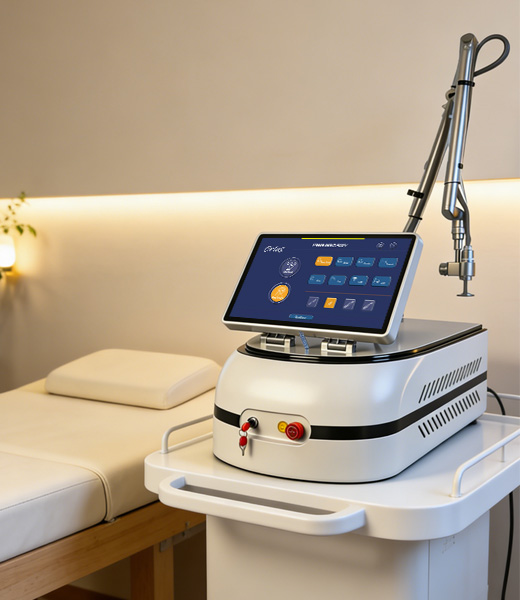
A long feature list can hide the questions that matter most: Will this platform fit the way your team works? Can it perform consistently across a full day? Is the configuration supportable in your market?
The strongest procurement decisions connect technical specifications to operating reality. Use the framework below to move that conversation forward.
1. Start with the workflow, not the wattage
Define the treatment mix, typical daily volume, operator experience, room constraints, and handpiece changes. These inputs shape the useful architecture more than a single peak output number.
- Which protocols drive most of the projected revenue?
- How many operators and locations need consistency?
- Where does setup time interrupt the schedule?
A device is only productive when the workflow around it is repeatable.
2. Ask how the platform manages heat
Cooling is central to comfort, output stability, and component life. Ask how the water loop, TEC stack, contact surface, sensors, and safety thresholds work together—not simply how cold one component can become.
3. Compare lifetime economics
Look beyond purchase price. Model utilization, consumables, expected service, training time, downtime exposure, accessories, freight, and re-certification needs if a configuration changes.
4. Confirm the document set before ordering
Certificate availability depends on the exact model, configuration, and destination market. Request document holders, model numbers, label samples, manuals, and declarations early enough to review them.
A clear next step
Send the same operating brief to every supplier. A strong response should map the brief to a specific configuration, explain tradeoffs, and identify open questions before quoting.
Request an ADS model comparison